
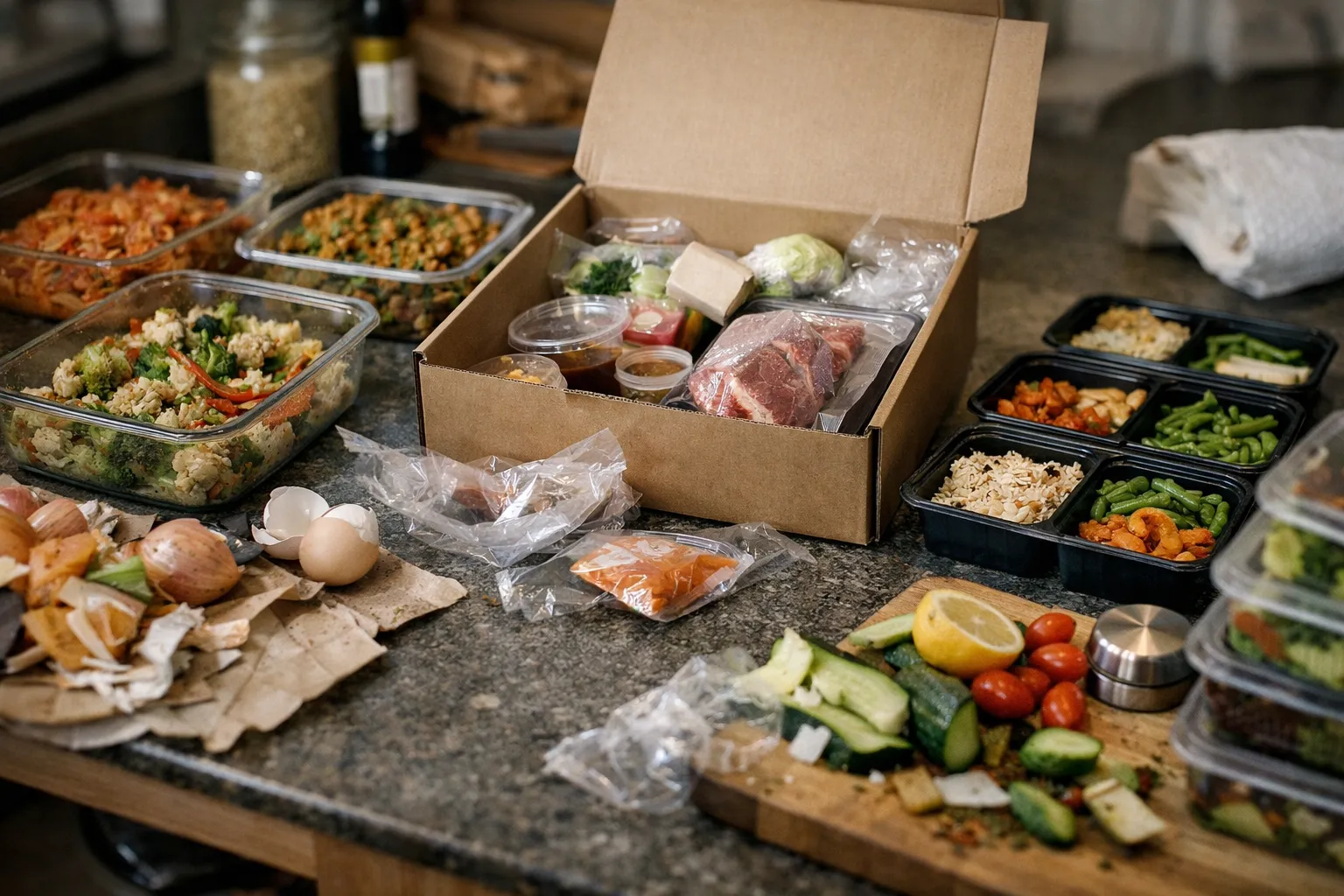
Overview
Home cooks still have more choices than ever for feeding themselves and their families. This October 2026 update compares three mainstream approaches—batch cooking (large-batch meals portioned for the week), meal kits (pre-portioned ingredients and recipes delivered or picked up), and weekly DIY grocery-based prep (shopping weekly and prepping components without full batch cooks). I show how cost, time, food waste, nutrition and recent market changes should shape your choice so you can pick a plan that fits your schedule, budget and values.
Background
The habits that accelerated during the pandemic kept evolving. Meal-kit firms that expanded rapidly in 2019–2021 consolidated and refocused on retention, personalization and sustainable packaging through 2024–2026. Grocery-price inflation that spiked in 2021–2023 eased in many markets by 2025, but staples generally remain above pre-2020 levels; that means the cost calculus is different for every household.
Two structural changes matter for meal planners in 2026: (1) wider availability of hybrid products from grocers—partially prepared “meal components” and in-store kits that bridge convenience and cost—and (2) better packaging choices from several national meal-kit brands, including compostable insulation liners and recyclable films in markets with organics infrastructure. Both trends let consumers mix approaches without as much compromise on waste or quality.
Data and Evidence: Cost, Time, Waste, Nutrition
Cost-per-serving (updated typical ranges)
- Batch cooking: $1.50–$5.00 per serving. Bulk staples and whole birds or legumes still offer the best unit costs. For many U.S. households a lentil stew, rice and roasted frozen veg can land under $2 per serving when you buy staples on sale or in bulk.
- Meal kits: Roughly $7–$12 per serving for mainstream plans in 2026. Competitive pricing, promotional acquisition offers and lower-cost “essentials” lines pushed averages toward the low end of earlier ranges; premium chef or organic plans still run higher.
- Weekly DIY prep: $3–$8 per serving. Buying standard grocery portions and doing light prep (washing greens, chopping, cooking grains) typically sits between batch cooking and meal kits—closer to batch cooking if you shop sales and buy frozen or bulk.
Time investment (typical weekly commitments)
- Batch cooking: 1.5–4 hours in one or two concentrated sessions, plus 5–10 minutes reheating per meal. Think of this as making a larger time “deposit” early in the week.
- Meal kits: 15–40 minutes per meal, spread across the week. Time is distributed into small, predictable increments and planning work is minimal.
- Weekly DIY prep: 30–90 minutes per week for prep plus shopping time; finishing steps (sautéing, assembling) add a few minutes each meal.
Food waste and packaging
Recent life-cycle analyses and municipal pilot programs through 2025–2026 confirm the familiar trade-off: meal kits reduce household-level food waste but increase single-use packaging; batch cooking limits per-serving packaging but risks spoilage if portions aren’t consumed or frozen. Where local composting and recycling services exist, newer meal-kit packaging can be routed into organics or recycling streams, improving the net environmental picture.
Practical takeaway: match your choice to local waste handling. In cities with curbside organics and film recycling, a meal kit’s lower food waste may offset its packaging; in places without those services, batch cooking or buying bulk staples with minimal packaging usually produces a smaller household footprint.
Nutrition and dietary control
Meal kits in 2026 more consistently provide full nutrition labels, clearer allergen warnings and calorie ranges per serving—useful if you track macros or sodium. Batch cooking still gives the most control over ingredients and portion sizes, and weekly DIY prep offers flexibility to adjust meals day-to-day. Registered dietitians continue to emphasize adherence: the healthiest approach is the one you will actually maintain.
Multiple Perspectives
Home cooks
Batch-cooking fans praise predictability and per-serving savings. Busy professionals appreciate meal kits for reliability and variety with minimal planning. Families with changing schedules often mix approaches—batch cooking lunches, DIY prep for school nights and meal kits for weekend dinners.
Environmental advocates
Advocates stress two priorities: reduce food waste and minimize packaging. In 2026 the debate is more nuanced because improved compostable liners and take-back programs have appeared, but the effectiveness depends on local infrastructure. Advocacy groups now focus on standardizing meal-kit packaging materials to improve recyclability and compostability claims.
Nutrition experts
Dietitians note that meal kits can be a gateway for home cooking for people who otherwise rely on takeout; steady home cooking tends to improve diet quality. For tight budgets, thoughtful batch cooking delivers the best nutrient-per-dollar outcome when recipes emphasize vegetables, legumes and whole grains.
Industry players
Meal-kit companies have diversified: subscription plans, à la carte heat-and-eat lines, pickup lockers at grocery stores, and “bulk kits” priced for families. Grocers are expanding partially prepared options—pre-chopped vegetables, marinated proteins, and in-store meal kits—so shoppers can find middle-ground solutions close to home.
Implications: What This Means for Meal Planners
Your choice should hinge on three levers: time availability, budget constraints and environmental priorities. Think of these like dials you can adjust.
- Cost-first households: Batch cooking still tends to win. Buy whole chickens, dried beans, frozen veg, and choose versatile bases. Label and freeze portions you won’t eat within 3–4 days.
- Convenience-first households: Meal kits reduce planning friction and can lower incidental takeout spending. Use promotional offers and switch to lower-priced plans if cost becomes an issue.
- Environmental-first households: Match choices to local services. If you have composting and film recycling, a meal kit’s lower food waste can be acceptable; otherwise prioritize bulk buying, reusable containers and batch cooking.
- Nutrition-focused households: Use batch cooking or choose meal-kit recipes with clear nutrition info and vegetable-forward plates. Pre-portioning helps avoid oversized servings.
Practical Strategies: Mixing Approaches Without Extra Stress
- Batch-cook lunches (grains, beans, roasted veg) and use meal kits for 1–2 dinners weekly to learn new techniques and keep variety.
- Use a weekly DIY prep session to pre-wash greens, chop aromatics and roast a protein that becomes building blocks across meals.
- Try grocery “semi-kits” (in-store kits) for a cheaper kit-like experience with less packaging in some markets.
- When you subscribe to a meal kit, treat it like a bill: schedule pauses and skip deliveries before you pay for more than you want.
What to Watch Out For
- Hidden costs: Meal kits can cut takeout spending but watch subscription inertia and delivery fees. With batch cooking, unrealized meals or spoilage erase savings—freeze extras promptly.
- Nutrition traps: Large batches of creamy, fried or calorie-dense meals can undermine health goals. Balance each batch with vegetables, legumes and whole grains.
- Storage safety: Cool food within two hours, refrigerate for 3–4 days, or freeze. Label containers with dates and rotate older items forward.
- Greenwashing: Scrutinize packaging claims—“compostable” is meaningful only where collection exists. Look for clear instructions and third-party certifications when environmental impact matters.
Outlook: What to Watch in 2026–2027
Expect continued hybridization: grocers and meal-kit companies will keep narrowing the gap between convenience and cost. Watch for these developments:
- More hybrid products (bulk family kits, semi-prepped grocery aisles).
- Packaging standardization and increased availability of compostable materials in major metro areas.
- AI-driven personalization—recipe suggestions tailored to past behavior—reducing waste and improving value for frequent kit users.
For meal planners, the practical rule remains: use your calendar as the guiding metric. Block time for batch cooking if you prefer fewer decisions; reserve meal-kit nights for variety and skill development; and keep a short weekly prep list for unpredictable weeks.
FAQ: Common Questions (October 2026)
Is batch cooking always the cheapest option?
Not always, but usually on a per-serving ingredient basis. Savings depend on disciplined use: if prepared meals sit uneaten, the cost advantage disappears. Plan menus you enjoy, freeze extras, and rotate dishes to protect savings.
Do meal kits reduce overall food waste?
Household-level waste tends to be lower with kits because ingredients are portioned, but packaging waste increases. The net environmental effect depends on local recycling and composting infrastructure and on whether the kit provider uses recyclable or compostable materials.
How do I safely store batch-cooked food long-term?
Cool food within two hours, refrigerate for up to 3–4 days, or freeze portions for longer storage. Use airtight containers, label with dates, and defrost in the refrigerator overnight rather than at room temperature for safety.
Can I combine methods without extra work?
Yes. Use batch cooking for predictable meals (e.g., weekday lunches), schedule a meal-kit dinner for variety once a week, and maintain a 20–30 minute weekly prep session (washed greens, chopped garlic, cooked grains) to reduce daily friction.
What should I look for when choosing a meal-kit plan in 2026?
Check per-serving price after discounts, delivery fees and minimums; review nutrition and allergen information; and evaluate packaging disposal options in your area. Try a single-box trial or a short-term plan to test timing and portion sizes before committing.