
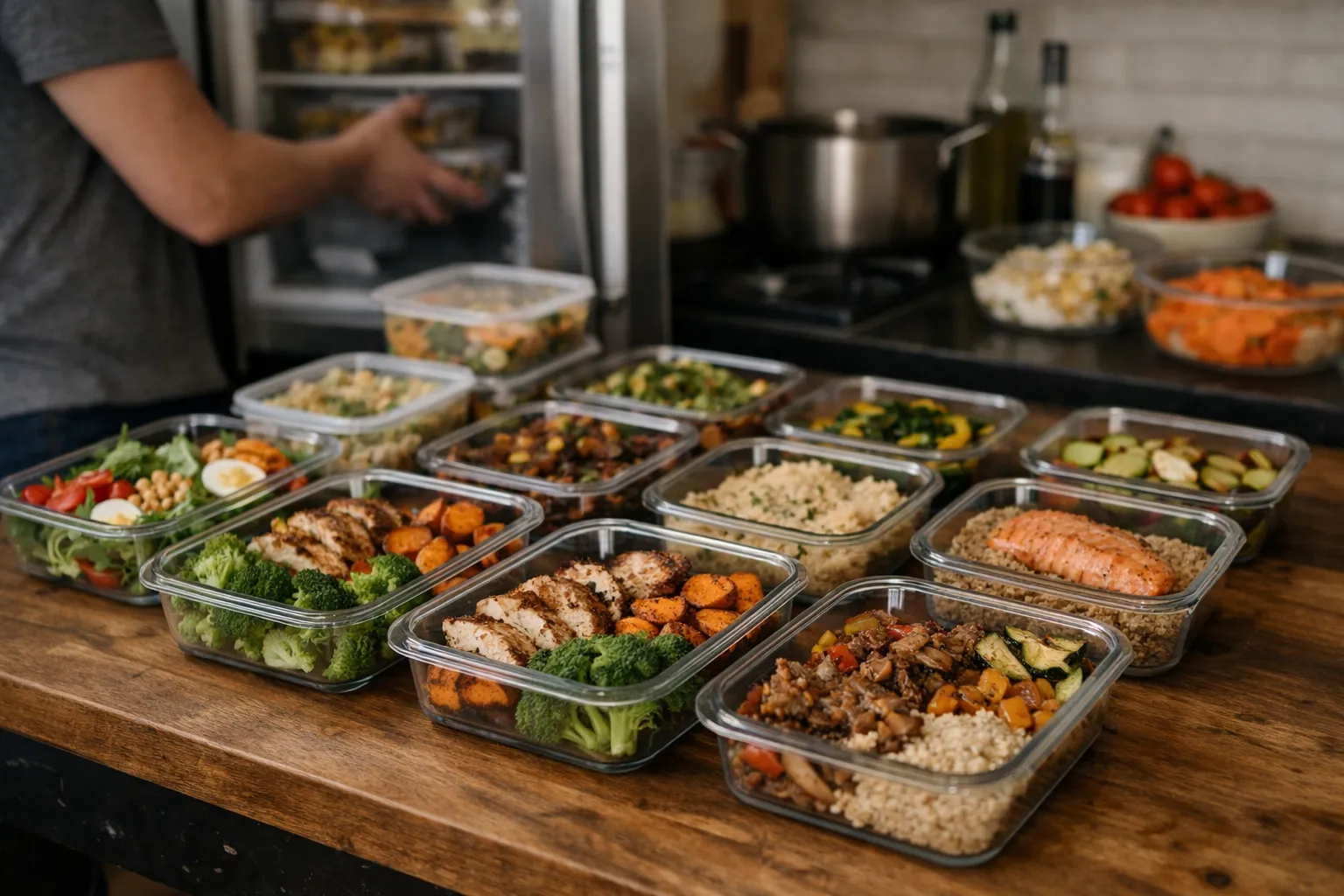
Who this is for: home cooks and meal planners who need reliable, weekday lunches and dinners without using a freezer. Whether you live in a small apartment, try to cut energy costs, or simply prefer fresher flavors, this system gives you a single 90–150 minute weekly workflow that produces five safe, tasty meals.
What you’ll learn: an updated, safety‑first 2026 workflow—menu design, shopping math, a timed batch session, storage and reheating rules, new tech that helps maintain cold chain integrity, and a reusable 5‑day sample plan. I’ll also show how to track real savings so the numbers match what shows up in your bank account.
Why a refrigerator‑only system matters in 2026
The core reasons from earlier editions still hold: limited freezer space in urban homes, desire for fresher tastes, and less waste from freezer burn. Two practical changes to consider for 2026:
- Smart cold‑chain monitoring is affordable. Wi‑Fi/bluetooth fridge thermometers with alerting and logs (sub-$50 models are common) let you verify the ≤40°F (≤4°C) rule remotely and detect door‑ajar events that raise spoilage risk.
- People are trading bulk freezing for quality: many home cooks prioritize 3–5 day fresh cycles and a small midweek fresh cook over large freezer batches—this reduces energy use and keeps flavors brighter.
The food‑safety baseline remains unchanged: USDA/CDC temperature guidance (≤40°F / ≤4°C) and 3–4 day safe windows for most cooked proteins. The numbers tell a different story than marketing: when you design meals around ingredients that reliably hold 3–5 days, you typically save 30–90 minutes daily and $6–15 per meal versus takeout (example math below).
Prerequisites / Context
- Fridge temperature: Target ≤40°F (≤4°C). Use a simple fridge thermometer or a smart probe that logs temps.
- Containers: 4–8 airtight 650–900 ml containers and 2–3 larger 2–3 L containers. Glass with high‑barrier lids is preferable for reheating and longevity.
- Kitchen gear: One sheet pan, one heavy pot, one sauté pan, oven, instant‑read thermometer, and optional vacuum sealer. Affordable immersion circulators (sous‑vide) and ice‑bath chills are practical options in 2026.
- Time budget: 90–150 minutes on batch day (commonly Sunday). Expect ~120 minutes for a balanced 5‑day plan.
- Food‑safety tools: Instant‑read thermometer, fridge thermometer, sanitized cutting boards, timer, and labels.
Step 1 — Design a 5‑day menu that actually holds
Principle: combine stable carriers (grains, roasted root veg, pickles) with proteins that hold 3–4 days in the fridge, plus one midweek fresh element if you want Day 5 to feel new. Here’s an updated approach for 2026 tastes and tech:
- Pick 2 protein strategies: one cooked‑same‑week protein (e.g., roasted chicken thighs; cooked shelf life 3–4 days) and one plant‑forward option that holds to Day 5 (e.g., chickpea salad, marinated tofu). Sous‑vide portions are an excellent way to get consistent doneness and chill quickly in an ice bath.
- Choose 2 carbs: long‑holding grains (rice, farro) and a quick‑refresh carb (couscous, steamed baby potatoes) that reheats in minutes.
- Pick 3 veg types: roasted root veg (sweet potatoes, carrots), sturdy crucifers (broccoli, cauliflower), and crisp raw veg (cabbage, bell pepper) that you dress at service.
- Add preservers: vinaigrettes, concentrated sauces, and quick pickles—acid and oil increase perceived freshness and slow quality loss.
Example 5‑day plan (lunches):
- Days 1–3: Lemon‑garlic roasted chicken thighs + brown rice + roasted broccoli
- Days 4–5: Chickpea herb salad + couscous + quick pickled carrots
Step 2 — Smart shopping and yield math (updated)
Buy to yield, not to raw weight. Use these verified conversion rules and a small spreadsheet to avoid midweek shortages.
- Portions: protein 4–6 oz cooked (115–170 g), carbs 3/4–1 cup cooked, veg 1–2 cups.
- Yield math: 1 lb raw boneless chicken → ≈12–14 oz cooked (three 4‑oz servings). Example: 5 × 5 oz cooked = 25 oz cooked → ≈1.6 lb cooked → buy ~2.1–2.4 lb raw bone‑in or 1.9–2.1 lb boneless.
- Buffer: buy an extra 5–10% of grains/beans to avoid running short across five meals.
Cost example (2026 practical ranges): if your local takeout averages $12–18 per meal, and your batch per‑meal cost is $3–6 depending on protein and produce choices, your per‑meal saving is $6–15. For five meals/week that’s $1,560–3,900 per year. Track local prices for precision—small per‑meal savings compound quickly.
Step 3 — The 90–150 minute batch session (sequence)
Work in parallel to maximize oven and stove use. This sequence reflects tools common in 2026 (instant‑read probe, smart thermometer, shallow cooling pans):
- 00:00–00:10 — Preheat & prep: Preheat oven to 425°F (218°C). Rinse grains; preheat water for rice. Line sheet pan; chop root veg and toss with oil and salt.
- 00:10–00:20 — Start grains & protein: Put rice/quinoa on simmer. Season chicken thighs (or start sous‑vide pouch). Place on sheet pan.
- 00:20–00:50 — Roast chicken & veg: Roast 30–40 minutes. Use an instant‑read or probe thermometer (target 165°F / 74°C for poultry). If using sous‑vide, finish with a 2–3 minute sear and then ice‑bath chill for rapid cooling.
- 00:30–00:50 — Make plant protein and dressings: Mix chickpea salad, make vinaigrette, quick‑pickle carrots in a shallow jar.
- 00:50–01:00 — Rest & check temps: Rest cooked proteins 5–10 minutes. Confirm internal temps. Begin portioning grains.
- 01:00–01:20 — Portioning & cooling: Use shallow pans to speed cooling. Portion protein, carbs, veg. Leave lids slightly ajar until ambient cooled (or use rapid chill in ice bath for sealed sous‑vide pouches).
- 01:20–01:30 — Label & refrigerate: Label cooking date and use‑by (3 or 4 days). Place containers in the coldest area of the fridge—not the door. Turn on fridge thermometer alerts if temps spike.
Why this sequence works: it minimizes hands‑on time, speeds safe cooling, and uses tech available to most households in 2026 to ensure cold‑chain integrity.
Step 4 — Storage, safety, and shelf‑life rules (practical)
Food safety is non‑negotiable. Here are the essential, verifiable rules you must follow:
- Fridge temp: Maintain ≤40°F (≤4°C). Check weekly. Smart probes give logs and alerts for door‑open events.
- Leftover window: Cooked proteins and mixed meals: 3–4 days refrigerated (USDA guidance). Acidic, oil‑dressed salads without dairy/mayo can last 4–5 days if cold chain is continuous.
- Labeling: Mark cooked date and "use by" date (e.g., Cooked 10/10 — Use by 10/13 for a 3‑day protein). Use FIFO to avoid waste.
- Vacuum sealing & sous‑vide: Vacuum sealing slows oxidation and, combined with strict refrigeration, can extend quality marginally. It is not a substitute for proper refrigeration.
- Reheat safely: Reheat to 165°F / 74°C throughout. Check with a probe. For soups/stews, bring to a boil.
Step 5 — Reheating, plating, and midweek refreshes
- Microwave: Add 1–2 tbsp water or sauce, cover loosely; 2–3 minutes, stir halfway. Check with probe.
- Stovetop: Reheat grains with a splash of broth; add protein and sauce until 165°F.
- Oven finish: For a crisp top, reheat at 375°F for 8–12 minutes (covered until last 3 minutes to avoid drying).
- Midweek refresh: Brighten Day 4–5 with herbs, a quick lemon vinaigrette, soft cheese dollop, or fresh raw slaw. Quick pickles made on Sunday generally stay crisp through Day 5.
Common mistakes to avoid
- Packing hot: Traps heat and raises fridge load. Cool 20–30 minutes or shallow‑pan first.
- Relying on the freezer for safety: Freezer masks planning gaps—design meals that don't depend on midweek frozen pulls.
- Overloading the fridge: Blocks airflow; leave room for circulation.
- Ignoring date labeling: Without dates, you’ll keep things past safe windows—label clearly and discard on schedule.
- Trusting smell/appearance: Spoilage is not always visible; follow date and temp rules instead.
Pro tips (advanced, 2026‑proof)
- Use smart‑probe logs: If you store meals for 4–5 days, a logged fridge temp history gives you confidence for borderline cases and documents cold chain for peace of mind.
- Sous‑vide + ice bath: Sous‑vide cooking gives reproducible portions. Rapid chilling in an ice bath after sous‑vide reduces time in the bacterial risk zone.
- Concentrated sauces: Make concentrated sauces (reduce stock + acid) to store separately; they halve reheating time and preserve texture.
- Rotate protein types across weeks: Alternate poultry, fish (up to Day 2–3), and plant proteins across pay periods to control cost and freshness.
- Track your metrics: Keep a simple spreadsheet for two months: session time, fridge spoilage weight (%), and per‑meal cost. Aim to keep spoilage under 5% of cooked weight and per‑meal cooking time under 25 minutes on non‑batch days.
Sample 5‑day menu and shopping list (single Sunday session)
Yields five lunches for one person.
Menu
- Roasted lemon‑garlic chicken thighs (Days 1–3)
- Chickpea herb salad with lemon‑tahini (Days 4–5)
- Brown rice
- Roasted broccoli & sweet potatoes
- Quick pickled carrots
Shopping (approximate)
- 2–2.5 lb bone‑in chicken thighs (or 1.8–2 lb boneless)
- 1.5 cups dry brown rice (≈3.5 cups cooked)
- 2 large sweet potatoes
- 2 heads broccoli
- 2 × 15 oz cans chickpeas
- Lemons, garlic, olive oil, tahini, jarred vinegar, salt, pepper, mixed herbs
Estimated session timing
- Total hands‑on: ~120 minutes
- Per‑meal cooking cost (example range): $3–6 depending on protein and local produce
How to iterate and scale
Run a two‑week experiment: batch‑cook Week A and record session time, fridge spoilage (weigh or estimate), and per‑meal cost. In Week B, tweak one variable: change protein, add vacuum sealing, or introduce a midweek quick cook. If spoilage >5% of cooked weight or Day 4 meals feel stale, rotate more plant‑based items or make one midweek 10–15 minute fresh cook.
To scale for two people, increase ingredient multipliers by 1.8× rather than 2× to avoid overfilling the fridge; stagger portion storage so you don’t open every container each day—this reduces temperature fluctuation and preserves early meals.
Why this method beats ad‑hoc prep
Ad‑hoc cooking creates decision fatigue and more waste. A single 90–150 minute weekly investment yields predictable, safe meals. Financially: small per‑meal savings add up. Example: if takeout averages $12–18 and your batch per‑meal cost is $3–6, saving $6–15 per meal × 5 meals/week × 52 weeks = $1,560–3,900/year. Track your own receipts for precision—the point is consistency compounds savings.
Common mistakes — recap
- Don’t pack hot: cool first.
- Verify fridge temp ≤40°F weekly.
- Plan 3–4 day safe windows for proteins; use plant options for Day 5.
- Date and label: always note cooked and use‑by dates.
FAQ
Can I safely keep cooked chicken in the fridge for five days?
Official guidance remains conservative: USDA/CDC recommend 3–4 days refrigerated at ≤40°F (≤4°C) for cooked poultry. If you need Day 5, use a plant‑based dish for the final days, vacuum‑seal and strictly monitor fridge temps, or plan a small midweek fresh cook. Don’t rely on smell or appearance—use dates and temps.
Do smart thermometers really matter?
Yes for edge cases. A Wi‑Fi or Bluetooth fridge thermometer gives alerts and a temp log. If a door gets left open or the compressor cycles, you’ll know before spoilage spreads through multiple containers. They cost under $50 for basic models and can prevent a week’s worth of wasted meals.
Is vacuum sealing necessary?
No. Vacuum sealing helps reduce oxidation and can extend quality by a day or two for cooked proteins, but it does not replace refrigeration. It’s useful if you plan to push to Day 4–5 and want the best texture retention.
What’s the fastest safe method to cool food for refrigeration?
Spread hot food into shallow pans (≤2 inches depth) and stir grains; for proteins, use an ice bath or transfer vacuum‑sealed sous‑vide pouches to ice water to drop temps quickly. The CDC rule: refrigerate perishable food within 2 hours (1 hour if ambient >90°F).
How can I measure whether this system really saves me time and money?
Track three metrics for two months: weekly session time (minutes), per‑meal grocery cost (dollars), and spoilage (weight or percent). If spoilage is under 5%, per‑meal time on reheats is under 25 minutes, and per‑meal cost is at least 40–50% less than local takeout, you’re getting measurable gains. Adjust proteins and portions until you hit those targets.
Bottom line: In 2026, the fundamental rules of safe refrigerated meal prep haven’t changed: control temperature, portion accurately, cool quickly, and label. What’s new is affordable smart monitoring, wider sous‑vide adoption, and more high‑barrier reusable containers—tools that make a 90–150 minute weekly session safer and more reliable. Do the two‑week experiment, track the numbers, and iterate: the small savings repeat weekly and become meaningful fast.