
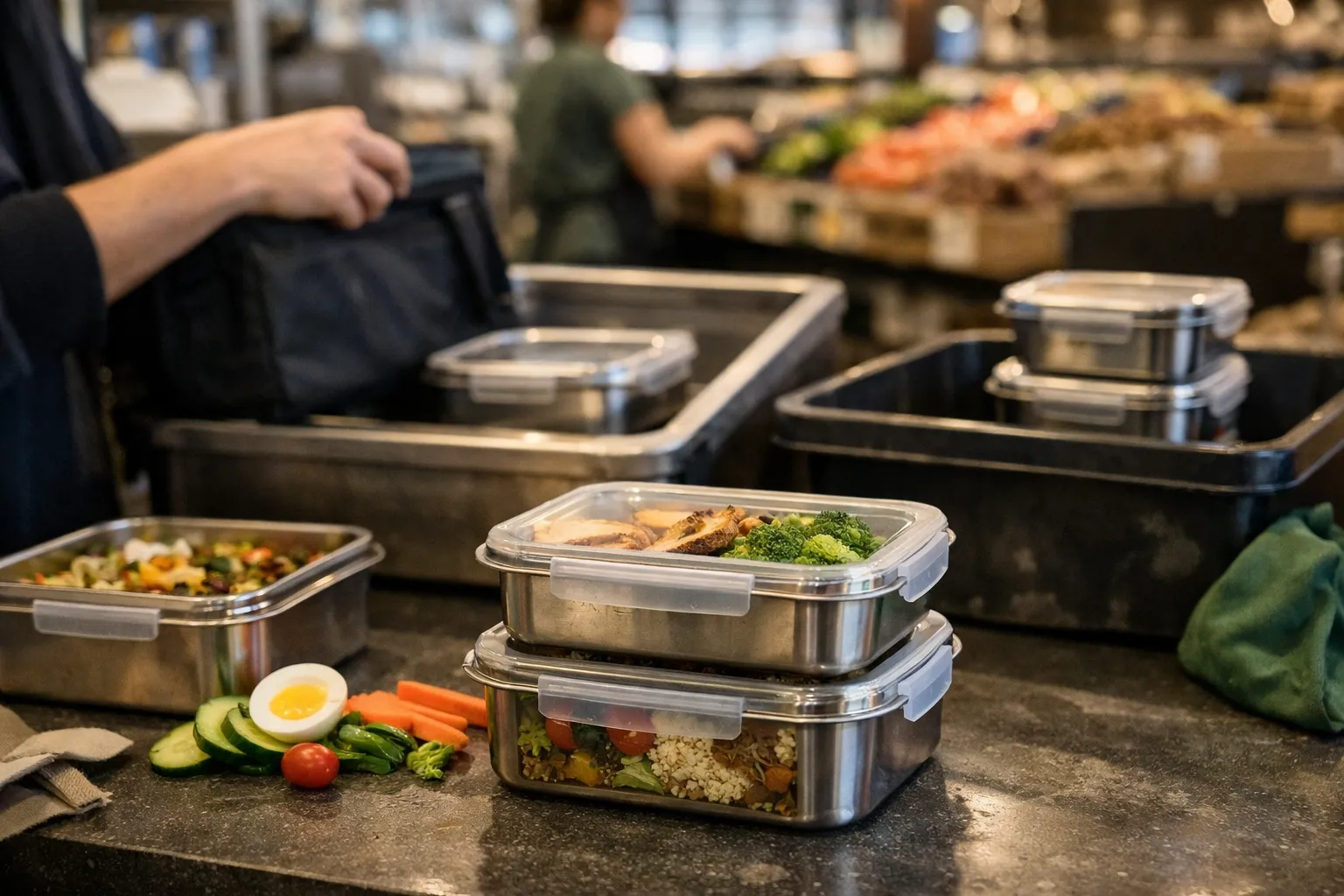
Who, what, when, where, why: As of October 15, 2026, grocery chains and meal‑kit operators have scaled reusable container pilots from a handful of test markets in mid‑2026 to multi‑city rollouts covering at least 10 U.S. metropolitan areas — including New York City, San Francisco, Seattle, Los Angeles and Chicago. Operators are moving from simple deposit boxes toward account‑linked returns (QR/RFID) and loyalty‑app refunds. The shift matters to meal preppers because the newest data change the break‑even math, return behavior and how you should plan cooling, reheating and storage.
Why this matters now
Two forces accelerated expansion between June and October 2026. First, supply‑chain and materials pressure that started in 2021 remains: retailers still seek to shave packaging spend and volatility from quarterly results. Second, pilot operators and a growing industry consortium have narrowed operational costs by standardizing container sizes and routing wash cycles more efficiently. In plain terms: the upfront container cost is now being diluted across more uses and fewer lost units, lowering the per‑meal packaging cost sooner than earlier pilots suggested.
What changed since June 2026
- Scale and standardization: Pilots expanded into at least 10 metro areas by mid‑October 2026, and three pilot coalitions announced a shared size standard (stackable 1‑liter and 500‑ml formats) to enable cross‑store returns.
- Return tech and refunds: More programs shifted to account‑based refunds through retailer apps and RFID‑tagged containers, replacing only‑at‑register deposit refunds and reducing friction for consumers.
- Improved attrition: Operators report attrition narrowing from the 8–22% range seen in early pilots to roughly 4–12% in mature pilots after loyalty incentives and app reminders were added.
- Washing logistics: Several chains moved washing in‑store (small commercial washers) to cut third‑party trucking costs, which lowered per‑cycle logistics expense by an estimated 10–20% compared with centralized wash hubs.
Details: how the updated pilots work
- Deposit and refund models: Deposit amounts remain in the $1.50–$3.50 range, but many programs now refund automatically via the retailer app within 48–72 hours of scan. Some pilots offer 10–20¢ loyalty bonuses per returned item to reduce attrition.
- Material and lifespan: Polypropylene designs sold to pilots now target 75–150 use cycles; stainless steel iterations target 250–400 cycles. Operators publish expected cycle counts in packaging FAQs.
- Sanitation: Updated pilot protocols (adopted by multiple municipal health departments during 2026) require commercial wash cycles that reach 160–180°F (71–82°C) and validation logs tied to container IDs. Most programs still require customers to rinse before return; a minority accept visibly dirty returns for a cleaning fee ($0.75–$2.00 per item).
- Traceability: QR codes and low‑cost RFID persist; app integration now provides customers a return history so you can see which returns triggered refunds.
The numbers: updated cost, attrition and per‑meal economics
The core calculus hasn’t changed, but the inputs moved. Here’s what the updated numbers look like for October 2026:
- Headline per‑meal savings: Mature pilots report per‑meal packaging savings of about 8–25% after the break‑even point, depending on container mix and return rates.
- Example amortization (updated): A $4 stainless steel container amortized over an expected 300 uses = $0.013 per use. A $2 polypropylene container amortized over 100 uses = $0.02 per use. Compare to $0.20–$0.60 per single‑use insulated tray historically used for chilled meals.
- Attrition effect: If attrition is 10%, effective per‑use cost rises roughly 11% (because 1 divided by 0.9 = 1.11). Early pilots with 20% attrition doubled the effective per‑use cost swing; moving attrition toward single digits is what turns promising math into real savings.
- Logistics and wash cost: In‑store washing reduced round‑trip logistics and cut per‑cycle wash‑and‑handling cost by an estimated $0.02–$0.07 per container in pilot disclosures.
What this means for meal preppers
The practical implications are straightforward: the reusable model can save you money, but only if you align behavior with program design.
- Track returns in the app: Use the retailer app to confirm refunds within 72 hours. If the program still uses kiosk refunds, snapshot receipts.
- Factor deposits into unit cost: Treat the deposit as pre‑paid credit. If you routinely forget returns, add $1.50–$3.50 to your per‑meal cost when comparing options.
- Mind the material: Choose polypropylene containers if reheating in the microwave matters (check label). If you prefer oven or stovetop finishing, stainless steel is durable but not microwave‑safe.
- Sanitation realities: The numbers tell a different story than some marketing copy: validated commercial washing matters. Rinse returns to avoid cleaning fees and protect sanitation logs.
- Combine errands: Loyalty bonuses and app reminders help, but plan returns with weekly grocery trips to avoid lost credits.
Stakeholder reactions
Retail sustainability leads describe the recent standardization and app refunds as the “difference‑maker” for customer adoption. Waste‑reduction advocates applaud lower single‑use volume but continue to press for transparency on attrition and lifecycle emissions accounting. Consumer groups remain watchful about hidden costs — unrefunded deposits, cleaning fees and time costs for returns.
"The numbers increasingly favor reusables, but only when returns are predictable and friction is low," says Sarah Chen, Senior Financial Analyst. "If you’re a home meal‑prepper, the key is process: rinse, scan, and consolidate returns on a schedule. That’s what converts potential savings into real ones."
What’s next — 6–12 months to watch
- Return‑rate transparency: Expect more pilot operators to publish monthly return rates. Look for attrition hitting sub‑10% — that’s the tipping point for consistent savings.
- Municipal guidance: Local health departments will continue to codify commercial‑wash validation for reusable foodware; any new mandates will raise operating costs and potentially slow rollouts in tight‑margin segments.
- Interoperability: If cross‑retailer return networks grow, convenience will improve and per‑meal logistics costs should fall further.
Will reusable containers really save me money?
Yes—sometimes. If you return reliably and use containers the number of times pilots expect (75–300+ cycles depending on material), you can see 8–25% lower per‑meal packaging cost versus disposables. Miss returns or pay cleaning fees and the math flips the other way.
Are reusable containers safe for batch‑cooked meals?
Yes—provided the operator uses validated commercial washing and you follow return instructions. Reusables do not change cooling times: cooked proteins and mixed dishes still need refrigeration within two hours and typically last 3–5 days under 40°F (4°C).
Should I keep my own containers instead?
For many home preppers, owning glass or microwave‑safe polypropylene containers is still the simplest and often cheaper long‑term choice. Use retailer reusables when refunds are seamless, deposit levels are modest and the program fits your routine.
FAQ: Quick returns checklist
How do I avoid losing my deposit?
Scan returns with the retailer app or save the kiosk receipt, rinse containers, and consolidate returns to a weekly trip. Expect refunds within 48–72 hours in most updated pilots.
What if I get charged a cleaning fee?
Check the program policy before purchase. If you were charged, contact customer service with a photo of the returned item and the refund transaction; many programs waive a first‑time fee for genuine mistakes.
Can I use retailer containers at home indefinitely?
Read the program FAQ. Some containers are designed for repeated home use; others are intended solely for return cycles and include tracking for lifespan management.