
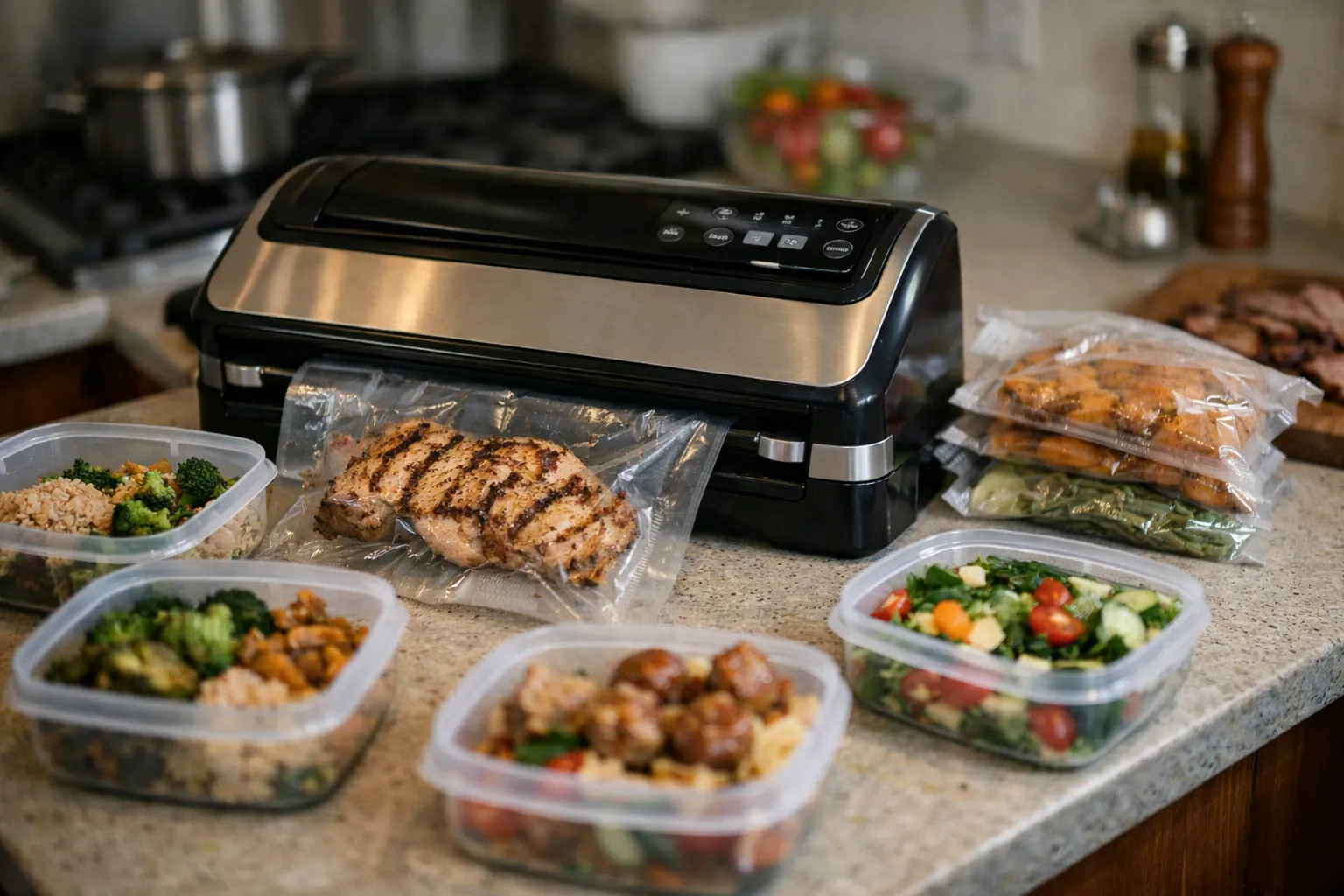
Overview — What we're reviewing
The FoodSaver V4840 is a mid‑range countertop vacuum sealer aimed at home meal preppers who freeze large batches, portion bulk proteins or cook sous‑vide. Key specs at a glance (Oct 2026): automatic vacuum & seal, built‑in bag roll storage and cutter, accessory hose for canisters, removable drip tray, and simple button controls. Typical retail pricing in October 2026 runs roughly $139–$189 depending on retailer and seasonal promotions; starter bundles often include a roll and a few pre‑cut bags.
Background — Who makes it and who it's for
FoodSaver remains the most recognized consumer vacuum‑sealing brand in the U.S., with decades of product iterations aimed at the home cook. The V4840 sits above bare‑bones clamp or handheld sealers and below commercial‑grade chamber units. Its sweet spot: cooks who batch‑prepare 6–20 meals weekly, freeze portions from bulk buys, or sous‑vide at home without needing industrial throughput.
Features analysis — How it performs in the kitchen
We put the V4840 through repeat sessions typical of a busy meal‑prep week: boneless chicken breasts, steaks, stew portions and marinaded veg. The machine delivers consistent, durable seals for dry and refrigerated items. Highlights and practical takeaways:
- Automatic vacuum & seal: The auto button does the heavy lifting. For most proteins and solids it sealed reliably; cycle time is adequate for household batches but not lightning fast if you have 30+ bags back‑to‑back.
- Built‑in roll storage & cutter: Still one of the most convenient touches in this price band—cutting custom lengths reduces waste versus default pre‑cut bags and saves money over time.
- Accessory hose: The hose works with FoodSaver canisters and jar lids for fragile items or wet ingredients where direct bagging is awkward. For sauces and soups, the canister route or pre‑freezing remains the best practice.
- Removable drip tray & cleaning: The tray collects raw juices and keeps things sanitary. The unit isn't dishwasher‑safe, but disassembly is quick and manageable for weekly use.
Newer context in 2026: reusable silicone vacuum bags and third‑party recyclable vacuum rolls have become mainstream enough to influence buying decisions. If reducing single‑use plastic matters to you, pair the V4840 with vacuum‑compatible reusable bags and a handheld pump or choose recyclable rolls sold by third‑party manufacturers; just confirm compatibility before you buy.
Food safety and storage considerations
Vacuum sealing is a preservation method — it reduces oxidation and freezer burn but does not substitute for safe cooling and handling. USDA and FDA guidance still applies: cool cooked foods to 40°F (4°C) or below within two hours and refrigerate or freeze promptly. Vacuum sealing creates an anaerobic environment that can favor pathogens like Clostridium botulinum if low‑acid foods are left at room temperature. In practice: vacuum‑seal only properly chilled or frozen items, and label packages with date and contents. For long freezer storage, aim to use meat within 6–12 months for best quality even when sealed.
Pros and cons — A balanced assessment
- Pros
- Reliable automatic seals for everyday batch cooking and home sous‑vide.
- Built‑in roll storage and cutter reduce ongoing bag waste and speed up workflow.
- Accessory hose and canister compatibility add versatility for delicate or liquid items.
- Removable drip tray keeps cleanup manageable after raw proteins.
- Mid‑range price point provides solid value for regular users.
- Cons
- Motor and cycle speed lag behind chamber or commercial sealers — not ideal for dozens of bags in a single session.
- Replacement bag and roll costs are ongoing; even with recyclable/third‑party options, expect recurring expense.
- Wet or saucy items still require pre‑freezing or canisters to avoid failed seals.
- Not dishwasher‑safe — a small but real maintenance consideration for heavy users.
Pricing and value
As of October 2026 the V4840 typically lists for $139–$189. Replacement food‑grade rolls and bags remain the primary ongoing cost: expect roughly $18–$35 for a 20–25 ft roll and $22–$45 for 50 pre‑cut bags, depending on size and retailer. Third‑party recyclable rolls and reusable silicone bags can lower per‑use plastic, but they have their own price points (reusable silicone bags typically amortize over many months of use).
How to think about value: if you buy meat in bulk and regularly avoid even $2–$4 of freezer waste per week, the machine pays for itself within a year through reduced spoilage and better portioning. For heavy weekly use (10–20 portions), the convenience and quality preservation justify the mid‑range cost; for occasional sealers, cheaper handheld options or single‑use zipper bags may suffice.
Who it's for — Use cases and ideal buyers
- Weekly batch cooks who freeze multiple meals or portions and need consistent seals for sous‑vide and long‑term storage.
- Households buying meat in bulk who want to portion and freeze without freezer burn.
- Home chefs who want canister compatibility for coffee, nuts or marinated veg.
- Not ideal for: occasional users who seal only snacks or single meals, and small food businesses that require faster, higher‑duty commercial equipment.
Alternatives to consider
- Nesco VS‑02 (~$70–$100): Budget hauler for light use; fine for occasional sealing but lacks durable bells and whistles for heavy batch cooks.
- Anova Precision Vacuum Sealer (~$179–$219): Popular with sous‑vide enthusiasts; compact, consistent seals and an established accessory ecosystem—compare roll prices and warranty terms.
- VacMaster VP112 (>$300): Entry pro chamber unit for semi‑commercial throughput—faster cycles and better for liquid‑rich products but higher upfront cost and footprint.
Verdict
We come at kitchen gear like we come at a close game: we want performance when it counts and no surprises. The FoodSaver V4840 still hits the target for the majority of home meal preppers in October 2026. It’s not a pro‑shop sprinter, but it’s a reliable, feature‑rich workhorse that simplifies weekly batch cooking and handles home sous‑vide without fuss. If you value integrated roll storage, a cutter and the accessory ecosystem, buy it. If you’re sealing only every few weeks or need commercial throughput, look at budget handhelds or chamber machines, respectively.
FAQ: Common questions
Will vacuum sealing make my food safe for longer?
Vacuum sealing extends the quality life of food by reducing oxygen exposure and freezer burn, but it doesn’t replace safe cooling and refrigeration. Follow USDA/FDA guidance: cool cooked foods to 40°F (4°C) within two hours, label and freeze or refrigerate promptly. Vacuum sealing can create anaerobic conditions, so handle low‑acid foods with proper refrigeration to mitigate botulism risk.
Can I seal soups, stews or marinades in the V4840?
Liquids are the trickiest. Best practice: freeze portions flat for 1–2 hours before sealing, or use the canister accessory. For heavy liquids, consider tray‑freezing (freeze in a shallow tray, then bag) to avoid vacuum pump contamination and failed seals.
Are reusable silicone bags a good alternative?
Reusable silicone vacuum‑compatible bags and external pumps are now mainstream and reduce single‑use plastic. They work well for many tasks, but they require a different workflow (washing, drying). For very long freezer storage, food‑grade vacuum rolls still offer lower oxygen transmission over long months; consider a hybrid approach.
How much should I budget for ongoing supplies?
Plan on $18–$35 for a 20–25 ft roll and $22–$45 for a 50‑count pre‑cut pack, with prices fluctuating seasonally. Reusable options cost more up front but can lower per‑use costs over time. Always check compatibility and sealed bag specs before buying third‑party rolls.
Is the V4840 worth it if I sous‑vide regularly?
Yes. The V4840 produces seals robust enough for typical home sous‑vide temperatures and durations. If you vacuum‑seal dozens of portions daily for long sous‑vide cooks, consider the speed and duty cycle of pro models—but for most enthusiasts, this unit is more than capable.