
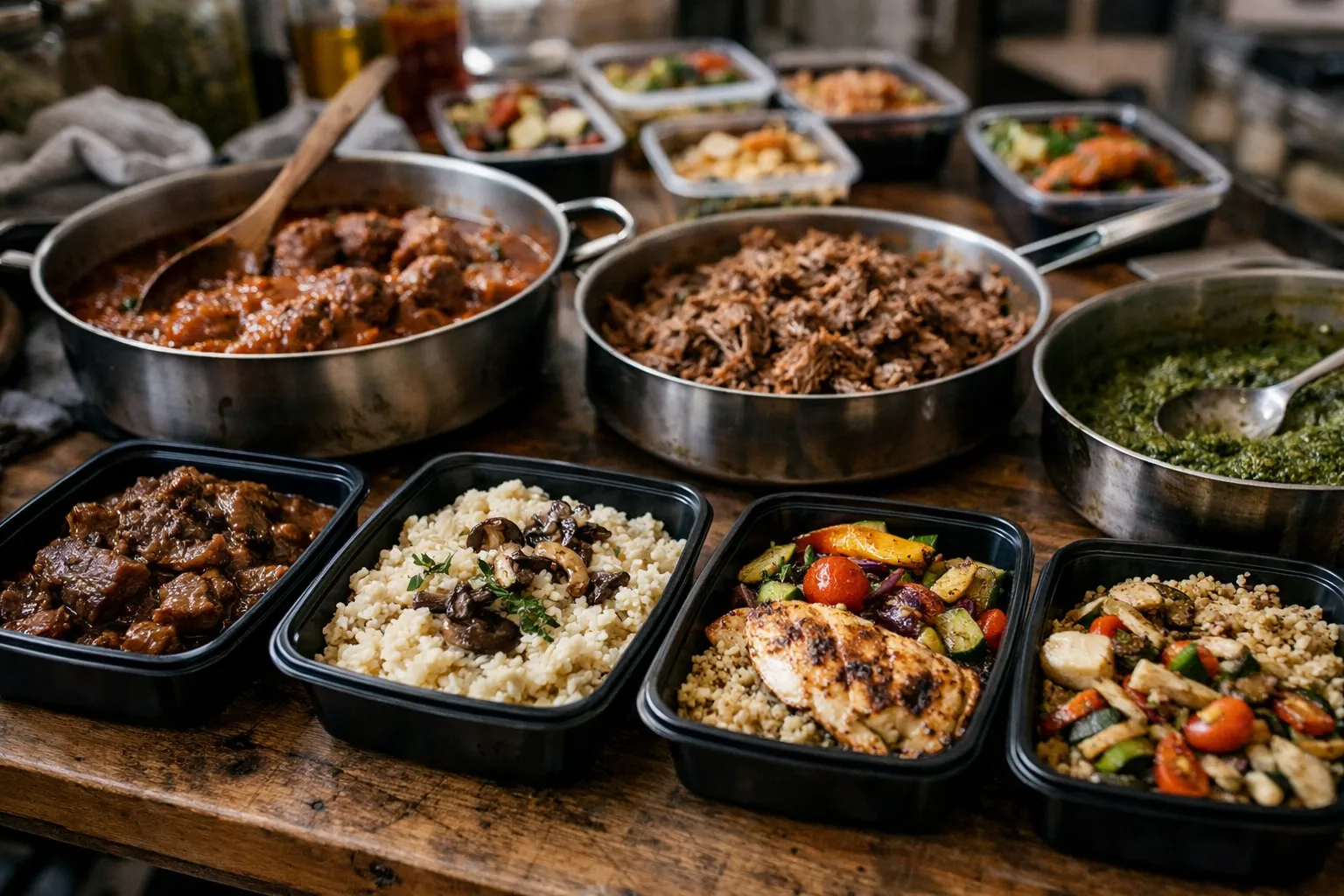
Introduction — What you’ll learn and who this is for
This updated guide, calibrated for October 2026, shows how to produce six restaurant‑quality batch bases in a single session and compose 18 distinct meals for two to four people across two weeks. It’s written for home cooks and meal planners who care about flavor, texture and provenance — not just convenience. You’ll get precise timing, modern storage and food‑safety best practices, finishing techniques that restore restaurant texture, and practical ways to use 2026 kitchen tools and ingredient trends to lift every plate.
Prerequisites & context: what to know before you begin
Batch cooking has evolved since this piece first ran in 2026’s mid‑year culinary conversation. Home kitchens now commonly include precision cookers, consumer vacuum sealers, app-linked smart ovens and more accessible countertop blast chillers. These tools can improve safety and texture, but the fundamentals remain: cool cooked food quickly, store it correctly, and finish in a way that restores contrast and brightness.
Before you start, confirm you have:
- Time: Plan 3–4.5 hours for a well‑organized session that produces the six bases below (oven and passive times overlap; exact times shown in each section).
- Equipment: 1 large Dutch oven or heavy pot, ovenproof roasting pan, sheet pans, heavy skillet, blender or food processor, vacuum sealer (optional), instant‑read thermometer, cutting board, 12–16 food‑storage containers (glass preferred), quality freezer bags, and a cooling rack. If you own a precision cooker or consumer blast chiller, integrate those for reliability.
- Storage plan: Enough refrigerator space and at least two freezer‑safe containers or vacuum‑sealed bags for long-term storage.
- Food‑safety basics: Refrigerate cooked foods within 2 hours (1 hour if ambient >90°F); reheat leftovers to 165°F (74°C) before serving — current USDA/FDA guidance.
- Sourcing awareness: In 2026 many diners prioritize regenerative beef, certified humane poultry, and seasonal produce; plan purchases around these priorities for flavor and sustainability.
Why these six bases — updated rationale for 2026
Each base is chosen for three reasons: an elevated flavor profile that reads “restaurant,” durability for refrigeration or freezing without losing character, and versatility — each yields at least three different plated meals. This edition adds contemporary finishing ideas and plant-forward substitutions that reflect 2026 ingredient availability (improved mycoprotein products, chef‑grade plant proteins, preserved citrus). The six bases are: beef short‑rib ragu, confit chicken thighs, pork shoulder carnitas, harissa roasted eggplant & chickpeas, lemon‑herb farro, and turmeric‑lentil dal.
Step‑by‑step: Batch‑cook the six bases
1. Beef short‑rib ragu (low‑and‑slow braise)
Why: Gelatinous texture and deep umami; braises freeze and reheat gracefully and read as luxury when plated.
- Cook time: 3–3.5 hours (active searing and 2.5–3 hour braise). Sear 3–4 lb bone‑in short ribs in batches until well browned. Deglaze with 1 cup full‑bodied red wine (or fortified wine for depth), add 2 cups mirepoix, one 28‑oz can San Marzano tomatoes, 2–3 cups beef stock and herbs. Braise at 300–325°F until fork‑tender.
- Finish: Skim fat, raise to a simmer and reduce 10–15 minutes to a glossy sauce. Adjust salt and finish with a splash of aged balsamic or sherry vinegar to brighten. Portion into three packages — one for the fridge, two for the freezer if desired.
- Storage: Refrigerate 3–4 days; freeze up to 3 months for best quality. If you own a vacuum sealer, sealing while warm (then blast chilling if possible) improves texture retention.
2. Confit chicken thighs (olive oil confit)
Why: Confit preserves succulence and yields crisped skin with a quick oven finish; the reserved confit oil is an ingredient unto itself.
- Cook time: 2.5 hours (hands‑on 30–45 min). Season eight bone‑in thighs with kosher salt, smashed garlic and thyme. Submerge in good olive oil in an ovenproof pan; cook at 275°F for 1.75–2 hours until tender.
- Finish: Cool in oil; reserve the oil for dressings or roasting vegetables. For storing, remove thighs from oil, pat dry and refrigerate up to 4 days; submerged and refrigerated, confit can keep up to about 7 days.
- Storage: Freeze portions vacuum‑sealed or well wrapped for up to 3 months.
3. Pork shoulder carnitas
Why: A do‑it‑all protein that transforms across cuisines; acid and fresh herbs maintain brightness at the table.
- Cook time: 3 hours (2.5–3 hrs oven/braise). Brown 4 lb pork shoulder, add orange juice, garlic, cumin and bay leaves; braise at 300°F until shreddable. For edge crisp, spread shredded pork on a sheet and broil 5–8 minutes.
- Finish: Reserve crisped bits separately to add at plating for texture contrast.
- Storage: Refrigerate 3–4 days; portion and freeze to 3 months.
4. Harissa‑roasted eggplant & chickpeas
Why: A plant‑forward base that improves after resting, offering spicy, smoky and bright notes; excellent for pasta, grains and flatbreads.
- Cook time: 1 hour. Roast 2 large eggplants (diced), red onion and red peppers tossed with 2–3 tbsp harissa, olive oil and salt at 425°F for 30–35 minutes. Add two drained cans chickpeas, finish with lemon and cilantro.
- Finish: Let rest overnight when possible; flavors meld and round out.
- Storage: Refrigerate 4–5 days; freeze in 1–2 cup portions for up to 2 months.
5. Lemon‑herb farro (toothsome grain base)
Why: Farro keeps a pleasant chew and resists getting gummy. It’s a premium, fiber‑rich base that pairs with proteins and roasted vegetables.
- Cook time: 30–40 minutes. Cook 4 cups farro in 8 cups seasoned stock until al dente (follow package for exact timing). Rinse briefly under cold water to halt cooking, drain, then toss with lemon zest, 2–3 tbsp olive oil and chopped parsley.
- Finish: Portion into six 1‑cup servings. Chill for salads or warm gently for bowls.
- Storage: Refrigerate 4–5 days; freeze for up to 2 months.
6. Turmeric‑lentil dal
Why: High‑protein and fast to reheat; carries spice and acidity well and pairs with grains or breads.
- Cook time: 30–40 minutes. Simmer 2 cups red lentils with turmeric, ginger, tomato, light coconut milk and vegetable stock until soft. Temper mustard seeds, cumin and curry leaves in oil and fold in.
- Finish: Portion into 4–6 servings; dal thickens as it cools—add stock when reheating to adjust.
- Storage: Refrigerate 4–5 days; freeze up to 2 months.
Composing 18 meals: three permutations per base (updated ideas)
For each base, pick three finishing strategies that change texture, starch and brightness. Below are refreshed pairings tuned for 2026 taste and pantry availability.
- Short‑rib ragu: 1) Fresh pappardelle, shave aged Grana Padano and lemon gremolata; 2) Creamy polenta finished with whipped mascarpone and roasted broccolini; 3) Ragu slider on milk‑brioche bun with quick pickled ramps.
- Confit chicken: 1) Warm Niçoise‑style salad with fingerling potatoes and preserved lemon vinaigrette; 2) Crisped thighs on charred sourdough with smoked yogurt and lemon zest; 3) Grain bowl with farro, quick‑pickled cucumbers and chili‑scallion oil.
- Carnitas: 1) Street tacos with pineapple‑and‑escabeche salsa; 2) Carnitas farro bowl with roasted corn and smoked paprika aioli; 3) Pulled‑pork sandwich with apple‑cabbage slaw and horseradish crema.
- Harissa eggplant & chickpeas: 1) Tossed with orecchiette, ricotta salata and lemon zest; 2) Over farro with preserved lemon, toasted almonds and mint; 3) On charred flatbread with strained labneh and a herb salsa verde.
- Lemon‑herb farro: 1) Farro tabbouleh with seared tuna and caper vinaigrette; 2) Warm farro with confit chicken, green beans and browned butter; 3) Chilled farro salad with roasted beets, aged goat cheese and pistachios.
- Turmeric lentil dal: 1) Dal over steamed basmati with cucumber‑mint raita; 2) Dal with roasted eggplant and coriander salad; 3) Lentil‑stuffed pita with pickled red onion and cilantro yogurt.
Practical storage, portioning and labeling — modern tips
- Portioning: Aim for 4–6 oz cooked protein per person per meal (increase for braises). Use a kitchen scale or measured scoop for consistency across servings.
- Containers: Glass is best for longevity and oven use. For the freezer, vacuum sealing reduces freezer burn and saves space; if using jars, leave 1/2 inch headspace.
- Labeling: Use waterproof labels or QR stickers tied to a refrigerator inventory app. Mark cook date, base, and “use by” (3–4 days refrigerated; frozen items: best quality 2–3 months). If you pasteurize sous‑vide, note the time/temperature used.
- Rapid cooling: Divide large batches into shallow containers. If you’re serious about food safety, a consumer blast chiller (now available in countertop models) will reliably reduce core temperature to below 41°F in under 90 minutes; otherwise use an ice bath and shallow pans.
Reheating and finishing to restore restaurant texture
Reheating is where many home meal‑prep plans fall short. These principles restore contrast and brightness:
- Safety first: Reheat to at least 165°F (74°C) before serving (USDA/FDA standard).
- Restore crispness: Use the oven or a hot skillet. For confit or carnitas, reheat to temp then broil 3–6 minutes or pan‑sear to re‑crisp surfaces. Avoid microwave‑only reheating for elements meant to be crisp.
- Revive sauces: Warm stews and braises gently; add 1–2 tbsp stock, wine or water if reduced during storage. Finish with a knob of butter, a splash of acid or a drizzle of good olive oil at plating.
- Grains & salads: Reheat farro with a splash of water or stock and fluff. For chilled salads, toss with a bright vinaigrette and fresh herbs just before serving.
- Use tech where helpful: Smart ovens with reheat programs and app timers simplify gentle reheating; precision cookers can re‑pasteurize vacuum‑sealed portions safely if you follow validated time‑temperature charts.
Common mistakes to avoid
- Cooling everything in one large pot — large volumes retain heat and risk staying in the bacterial “danger zone.” Divide into shallow containers.
- Freezing full glass containers without headspace — use freezer‑safe packaging or leave room for expansion.
- Over‑salting before freezing — salt concentrates when liquids reduce; hold back final seasoning if freezing.
- Microwave‑only reheating for crispy items — pair microwave with oven or skillet finish, or prefer oven/skillet alone.
- Neglecting labeling — without dates and notes you’ll waste good food. Use a consistent system and stick to it.
Pro tips for elevated results (Victoria Lane)
- Finish with acid and fat at service. A tiny splash of aged vinegar or a drizzle of flavored olive oil lifts rich braises the way a finishing salt brightens chocolate.
- Reserve a “crispy tranche”: set aside a portion of carnitas or ragu and crisp at plating. Texture contrast signals freshness even to a seasoned diner.
- Save and repurpose cooking fats. Confit oil is an inexpensive flavor booster—use it to roast vegetables, dress salads or finish grilled bread.
- Invest in a mid‑range vacuum sealer if you freeze often — it’s the single best tool to preserve texture and reduce waste.
- Embrace plant‑forward swaps: substitute mycoprotein, seasoned seitan or slow‑braised jackfruit for one base to stretch protein budgets without sacrificing dining quality.
Why this system still saves time and money in 2026
Consolidating active work into one session reduces weekday stress and elevates meals beyond reheated leftovers. Bulk buying (whole shoulder, bone‑in cuts, seasonal produce) and efficient tools like vacuum sealers or precision cookers make the operation economical. The investment in time and a few smart tools returns in better flavor, fewer dinners ordered out, and more control over ingredients and nutrition.
FAQ
How long can I safely keep cooked meat in the refrigerator?
Cooked meat and poultry should be refrigerated within 2 hours of cooking and consumed within 3–4 days, per USDA/FDA guidance. If you won’t use it in that window, freeze in airtight packaging; for best quality, eat within 2–3 months.
Is vacuum sealing necessary?
No. Vacuum sealing extends freezer quality and saves space, but well‑wrapped freezer bags or airtight containers are sufficient for most home cooks. If you freeze frequently or want restaurant‑level texture retention, vacuum sealing is worth the investment.
Can sous‑vide extend refrigerated shelf life?
Sous‑vide can pasteurize proteins at lower temperatures when you follow validated time‑temperature charts, which may extend refrigerated shelf life when combined with vacuum sealing and proper chilling. This requires precise control and adherence to safety charts — consult authoritative resources (USDA, FDA and sous‑vide pasteurization tables) before relying on it.
Should I use a consumer blast chiller?
Countertop blast chillers available in 2026 speed safe cooling and improve texture retention; they’re a good investment for serious batch cooks. If you don’t have one, divide into shallow containers and use an ice bath to cool rapidly.
How do I adapt this system for low‑sodium or gluten‑free diets?
Reduce added salt during cooking and finish dishes at the table. Substitute gluten‑free grains (sorghum, brown rice) for farro and check labels on prepared items (broth, harissa) for gluten. For low‑sodium needs, use unsalted stock and increase acidity and herbs for flavor instead of salt.
Final note
Batch cooking need not mean monotony. By choosing bases that hold quality, planning three finishing strategies per base, and using a few professional techniques and modern tools, you can create a repertoire of luxury meals that simplify weekdays while keeping texture and flavor front of mind. Start with one or two bases this weekend, refine your timing and finishes, then scale to all six when you’ve established your rhythm.