
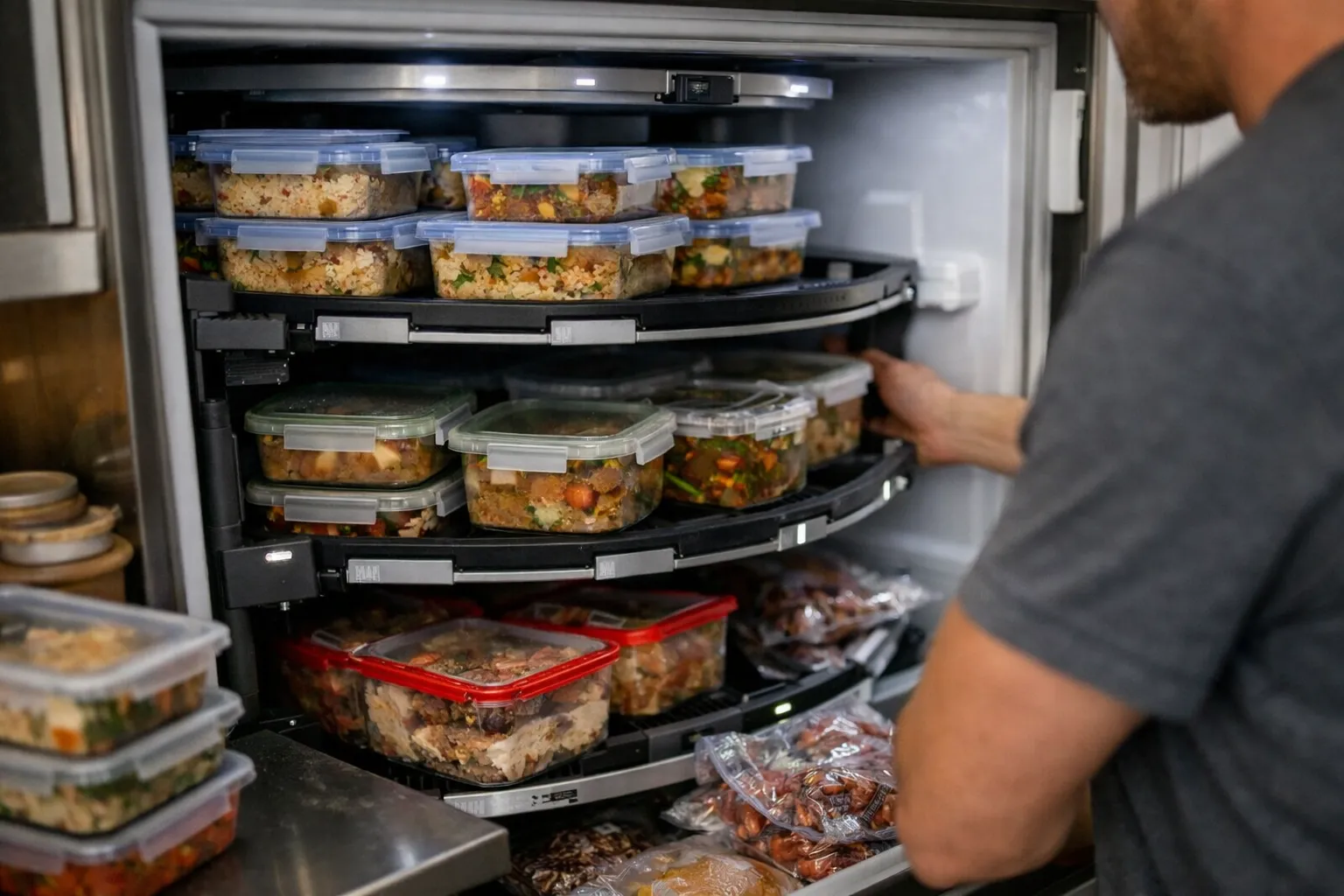
Introduction — What you'll learn and why it matters
This updated guide shows how to build and run a repeatable freezer rotation system for meal prep that saves money, time, and food quality — now tuned for October 2026. If you cook in batches, manage multiple diets, or treat household savings as long-term capital, this is for you. You’ll get an actionable four-part system (packaging, labels, physical zones, weekly checks), modern tech and product recommendations, fresh savings examples, and steps to turn disciplined kitchen habits into measurable financial value over years and across generations.
Prerequisites & Context
Before you begin, make sure you have the basics and understand the context:
- Freezer capacity: Upright or chest freezers sized to your household. Practical minimums: 5 cu ft for 1–2 people, 10+ cu ft for families. If you plan to scale batch-cooking or use frozen bulk buys, a 7–12 cu ft chest or upright is the most cost-effective home upgrade.
- Packaging and sealing: Vacuum sealer (FoodSaver or similar) for long-term items; quality freezer-safe rigid containers and reusable silicone bags for quick-turn meals. Consider BPA-free and microwave-safe options for reheating convenience.
- Labeling and inventory tools: Blank adhesive labels or a thermal label printer (e.g., Brother QL series), plus an inventory method — a smartphone app, a shared spreadsheet, or a pantry app that supports expiry dates and photos.
- Baseline knowledge: Freezers should be kept at 0°F (-18°C) or lower. Know basic food-safety thawing and reheating temperatures (aim for internal temps of 165°F/74°C for reheated dishes).
Why this still matters in 2026: household food waste remains a major avoidable cost. The EPA’s long-standing estimates (commonly cited at 30–40% food loss/waste within the US food system) are a reminder that improved household practices are meaningful both for budgets and climate. Advances since 2024 — inexpensive thermal label printers, NFC stickers, and freezer-inventory apps that sync across phones — make disciplined rotation easier and faster than ever.
Overview: The Four-Part Freezer Rotation System (with 2026 updates)
The system remains four interlocking parts. New in 2026: add a digital layer (QR/NFC labels or an app) and a short “7-day use” pull-list that prints to your phone or smart home device.
- Standardized packaging and portioning
- Clear dating, concise codes and digital links
- Logical physical organization (zones + FIFO)
- Weekly inventory & rotation check tied to meal planning
Step 1 — Standardize Packaging & Portion Sizes
How to do it now:
- Decide household portions: measure one or two representative meals to set single-serve and family-serve sizes. Example: adult single-serve stew = 18 oz (protein + veg + sauce); child-serve = 10–12 oz. Record weights on a packing cheat sheet so future batches match.
- Select containers by use-case: rigid containers (single-serves), quart vacuum bags (soups), half-sheet pans (casseroles). Use clear containers for quick ID and flat-freeze bags for stackable space savings.
- Use vacuum sealing for >3-month storage. For quick-turn items (use within 2–6 weeks), reusable silicone and zip-top freezer bags are faster and more sustainable.
- Adopt flat-freezing for soups and sauces to maximize cubic efficiency and reduce thaw time. Stagger batch sizes so you always have 3–7 immediate-use meals available.
Why this matters: consistency reduces decision friction, improves calorie control and helps you plan accurate grocery buys. When portion sizes are standardized, cost-per-portion is measurable — a key number if you’re tracking household cash flow or a side-business margin.
Step 2 — Clear Dating, Labeling & Digital Links
How to implement modern labeling:
- Label format: YYYY-MM-DD | Short Code | Servings. Example: 2026-10-12 | TURK-CHILI | 4. Keep codes 3–12 characters so labels stay readable.
- Include a one-line reheating note and allergen flags. Example: “Reheat: 350°F 20m | Contains: dairy, nuts.”
- Use QR codes or low-cost NFC stickers on long-term items. Scan links to a cloud note with full recipe, ingredient cost, and remaining portions — handy for shared households and multi-generational homes where caregivers rotate cooking duties.
- Invest in a thermal label printer (costs have declined): prints durable freezer labels that don’t smear in frost. If you prefer minimal gear, pre-print sticker templates and use a permanent marker for the date and servings.
Why this matters: digital links reduce the need for lengthy printing, store reheating instructions, and let you attach purchase-cost or allergen details for later tax or budgeting notes. They also make sharing food with family members or neighbors straightforward and traceable.
Step 3 — Physical Organization & FIFO (First-In, First-Out)
How to set zones in 2026 kitchens:
- Top/front zone — Immediate-use (use within 1–4 weeks): weeknight meals and single-serving lunches.
- Middle zone — Short-term (1–3 months): soups, roasted vegetables, and proteins you’ll rotate through the month.
- Back/bottom zone — Long-term (3–12 months depending on item): slow-cooked meats, bulk-bought proteins, fruit for smoothies.
Practical setup tips:
- Use clear, labeled stackable bins for chest freezers to avoid digging and temperature loss — pull a bin, rotate, and push back.
- Place newly frozen items behind older ones; for chest freezers, mark bin faces with the week number (e.g., W41-2026) so you always see age at a glance.
- Create a “7-day eat list” on the freezer door (sticky note or app widget) to make one-week consumption explicit; this reduces spoilage and decision time on busy days.
Why this matters: good physical organization reduces open-door time (energy savings) and prevents freezer burn from repeated handling. A clear FIFO flow preserves quality and keeps your planned meals aligned with grocery cycles.
Step 4 — Weekly Inventory & Rotation Check (with tech workflow)
How to run an efficient weekly check:
- Block a 10-minute weekly slot (Sunday evening or after grocery shopping) to reconcile physical contents with your digital inventory.
- Flag items reaching their “use soon” threshold in your app or spreadsheet. Example thresholds: grains/pasta 1–2 months; stews 2–4 months; casseroles 3–4 months; fruits 8–12 months.
- Plan 1–3 “use-it-up” meals for the coming week and add any missing ingredients to your grocery list to avoid duplicate purchases.
- For households tracking finances: add approximate cost-per-portion to flagged items so you can quantify monthly savings and track trends quarter-to-quarter.
Why this matters: linking the inventory check to meal planning and your grocery list closes the loop — you buy with an explicit plan and consume with a clear priority. The weekly habit turns freezer inventory into predictable cashflow instead of an opaque source of waste.
Practical Examples & Savings Math (2026 perspective)
Example 1 — Small family (2 adults, 1 child):
- Conservative benefit: reducing spoilage by one large casserole per month valued at $18 (price adjusted with 2026 grocery prices) saves $216/year.
- If rotation and inventory also eliminate two impulse single-meal purchases per month at $8 each, add $192/year. Total direct grocery savings ≈ $408/year.
Example 2 — Time value:
- If an efficient meal-prep system saves 30 minutes per weekday = 2.5 hours/week = ~130 hours/year. Valuing that time at $25/hour for household budgeting (conservative for many U.S. households) equals $3,250 of reclaimed time value per year.
Wealth perspective:
- If your household redirects $500/year of grocery savings into a taxable investment returning 6% annually, in 10 years that becomes roughly $6,200 (compound growth). Over decades, disciplined, recurring savings from kitchen systems compound materially—especially when combined with other household efficiencies.
New Tools & Trends (2026 updates)
- Smart inventory apps: Several apps now support barcode/QR scanning, cloud sync, and expiry reminders — use them to share freezer feeds across household phones. Look for apps with CSV export to keep records for budgeting or small business bookkeeping.
- Thermal label printers are cheaper and rugged: They produce freezer-safe labels that survive frost; invest if you batch-cook regularly.
- Low-cost NFC stickers: Stick one on long-term containers to tap with your phone and pull up recipe, cost, and thaw/reheat instructions instantly — handy in multi-cook homes and for gifting meals to elders or family.
- Sustainable packaging options: Biodegradable vacuum bags and silicone multi-use pouches have improved. Use disposable vacuum sealing judiciously for >3-month items and reusable options for quick-turn meals.
Common Mistakes to Avoid
- Vague labels: “Chicken” is not enough. Include date, portions, and reheating notes.
- Mixing short- and long-term items: If new items go behind older ones, FIFO fails. Maintain clear zone boundaries.
- Skipping the weekly check: Without a weekly habit, inventory and meal plans quickly diverge, increasing waste.
- Over-reliance on vacuum sealing: Vacuum sealing preserves quality but won’t fix outdated ingredients or poor planning. Seal with an inventory discipline in place.
- Ignoring the energy picture: Repeatedly propping open a freezer to search increases energy use — organize so you can see and grab quickly.
Pro Tips for Advanced Meal Preppers
- Batch with component thinking: Roast bulk vegetables, grill proteins, and portion into meal templates (grain + protein + veg). Mix-and-match increases meal variety without more cooking.
- Track cost-per-portion: Add simple cost tracking when you pack — ingredient total ÷ servings. Over time this reveals where cheaper cuts or seasonal buys maintain nutrition at lower cost.
- Maintain a quarterly audit: Once per quarter, export inventory and tally spoilage and impulse buys. Use that data to set a realistic savings target for the next quarter.
- For those running a meal-prep side business: Separate business inventory, follow local food regulations, and keep records for taxes. Freezer inventory tools double as bookkeeping when you tag cost and portions properly.
- Energy efficiency: Keep your freezer 75–90% full for best efficiency; use frozen water jugs to fill gaps in chest freezers if you need thermal mass while you build your system.
Implementation Checklist (First Month)
- Buy labels (or a thermal printer), a few stackable bins, and vacuum-sealer supplies if you plan long-term storage.
- Run a “pack day” to standardize portion sizes; label everything with date, reheating note, and servings. Add approximate cost if tracking finances.
- Create a shared inventory (app or spreadsheet) with columns: Item, Date Frozen, Servings, Zone, Use-By Threshold, Estimated Cost.
- Schedule a weekly 10-minute inventory slot and a monthly deep clean to inspect for freezer burn and reorganize bins.
Why This Is a Long-Term Financial Move
Treat your freezer as household infrastructure. The recurring savings from less waste, fewer impulse purchases, and smarter bulk buys compound over years. A disciplined freezer rotation system contributes to predictable cash flow, frees time for income-generating activities or caregiving, and reduces friction in multi-generational households where food is transferred or gifted. Small recurring savings — when redirected into investments or debt reduction — meaningfully improve long-term financial security.
Sources & Further Reading
- EPA — Food Loss and Waste: key estimates and guidance (widely cited baseline figures)
- USDA — Food safety and freezing guidance (general shelf-life and safety recommendations)
- Product pages and user guides for thermal label printers and vacuum sealers (for practical device comparisons)
FAQ
How long can I store cooked meals in the freezer safely?
For quality and safety, follow conservative ranges: cooked grains and pasta: 1–2 months; soups and stews: 2–4 months; casseroles and lasagnas: 3–4 months; fruits: 8–12 months. Use clear dating and a FIFO system — label dates are the control. If in doubt, smell and inspect for frost or off-odors; when safety is uncertain, discard.
Do vacuum-sealed meals really last longer?
Yes. Vacuum sealing reduces air exposure and limits freezer burn, typically extending quality by several weeks to months depending on the food. For items you plan to store beyond three months, vacuum sealing is cost-effective. For quick-turn meals, reusable bags or containers are faster and more sustainable.
What tech should I adopt first: thermal labels, NFC tags, or an app?
Start with a simple system you’ll use weekly. If you already use a shared grocery app, add a freezer inventory spreadsheet first. Next, add thermal labels for speed and legibility. NFC tags or QR codes add convenience for long-term items and shared households; they’re optional and most useful when you frequently hand off meals to others.
How do I avoid freezer burn when batch-cooking?
Minimize air contact with vacuum sealing or tight-wrapped containers, freeze quickly (flat-freezing speeds this), and avoid temperature fluctuations by not crowding the door. Store long-term items in the back/bottom zone and limit how often they’re handled.
What if I don’t have enough freezer space?
Prioritize versatile items (stews, proteins, prepped veg). Rotate weekly: buy smaller quantities more often until you can expand storage. Consider a 5–7 cu ft upright or chest freezer as an investment—many households recoup the cost via grocery savings and reduced meal-time friction within 6–18 months.
Start small: standardize one meal type, label consistently, and make the weekly inventory non-negotiable. In months, the system will reduce waste, smooth weekly decision-making, and add small but meaningful savings to your long-term household financial plan.